
Manorbier Castle: Visiting Guide, Tips & Tickets (2026)
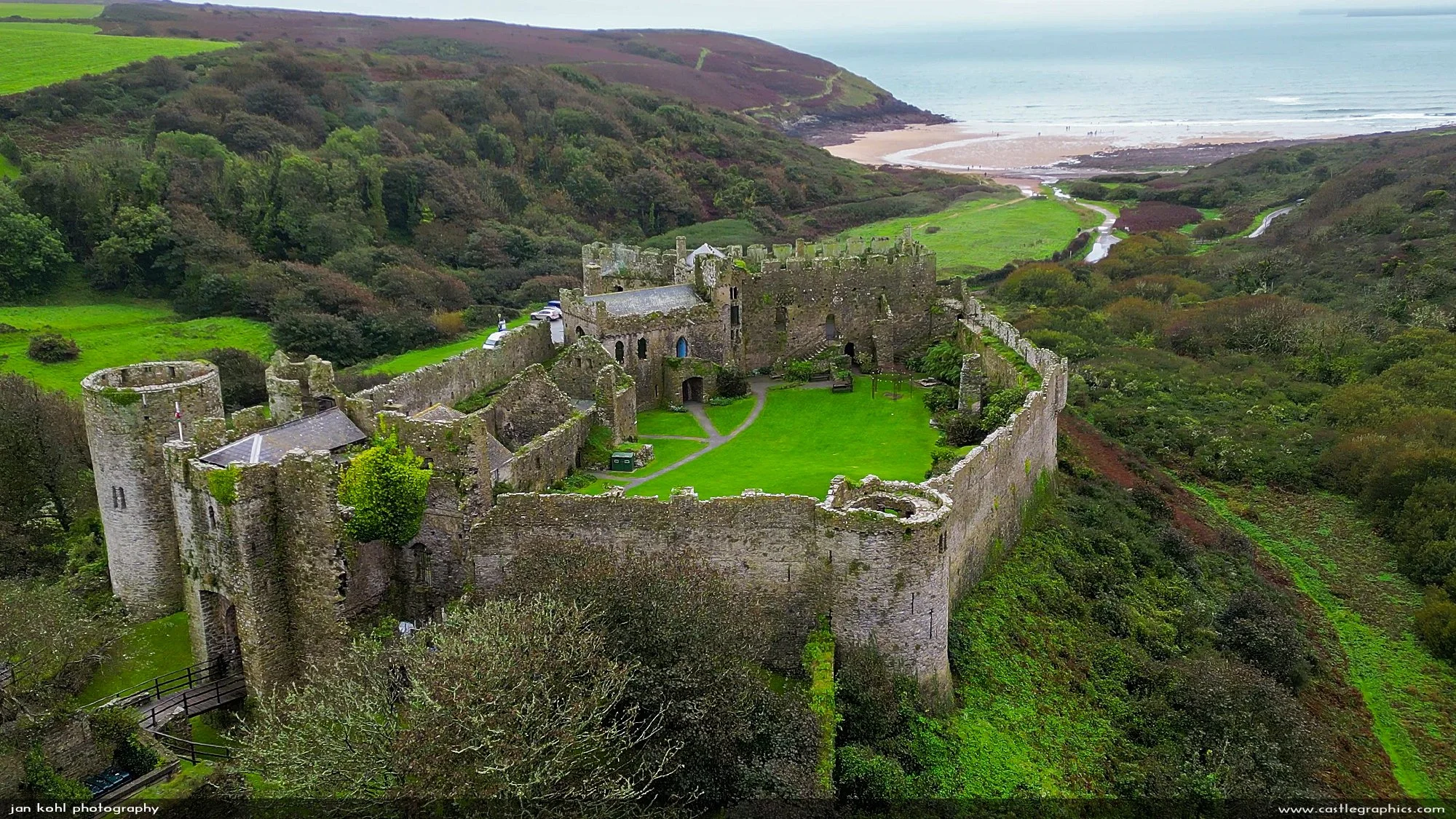
Manorbier Castle is a medieval fortress in Pembrokeshire. It dates from the Norman period. The site overlooks Manorbier Bay. The castle includes stone walls, towers, and a gatehouse.
The writer Gerald of Wales praised this place in the 12th century. He described it as one of the most pleasant locations in Wales.
Today, the castle is open to visitors. You can explore the ruins and walk along the walls. The site gives clear views of the coast and nearby countryside.
Visiting
Manorbier Castle is open to visitors for most of the year. The site is privately managed. Details can change, so you should check the official website before travel.
Opening Times
The castle usually opens daily from spring to autumn. Typical hours are 10:00 to 16:00. Check the castle’s website for closures.
Ticket Prices
Adults £6.50
Children and Seniors £4.50
Family ticket (2 adults, 2 children) £20
Prices may change. Check the official site for current rates.
Directions
The castle is in the village of Manorbier in Pembrokeshire. It is a short distance from Tenby. You can reach it by car via the A4139. Limited parking is available near the entrance.
Facilities
Small café on site
Gift shop
Toilets
Outdoor seating areas
Dog Policy
Dogs are allowed in outdoor areas. They must stay on a lead at all times.
For accurate and current information, visit the official website:
https://www.manorbiercastle.co.uk/
Visitor Tips
Wear sturdy shoes. Surfaces are uneven.
Take care on stone steps. They are worn and narrow.
Bring cash. Small sites may not accept cards.
Check weather before travel. Coastal conditions can change fast.
Allow at least one hour for your visit.
Keep dogs on a lead at all times.
Use nearby parking early in peak season.
Follow marked paths for safety.
Nearby Castles (Part of a Castle Crawl!)
Pembroke Castle
Pembroke Castle is a large, well-preserved medieval fortress located in Pembrokeshire, South West Wales.
Carew Castle
The ruins of a castle, which has evolved from a Norman fortification to an Elizabethan country house. The site also includes the only fully restored tidal mill in Wales.
Laugharne Castle
Laugharne Castle was first established in the late 12th century by the Anglo-Norman de Brian family as a wooden ringwork fortification.
Kidwelly Castle
Kidwelly Castle is a Norman stone fortress in Carmarthenshire, South Wales. It stands above the River Gwendraeth and offers views of the surrounding countryside.
Lamphey Bishop's Palace
Being updated.
A Brief History
Manorbier Castle began as a timber fort after the Norman invasion of Wales. Odo de Barri built the first structure in the late 11th century. The site gave control over the coast and local land.
The castle changed to stone in the 12th century. This work improved defence. Thick walls and towers replaced timber parts. The de Barri family kept control for many years.
Gerald of Wales was born here in 1146. He wrote about the castle in his works. He described its strong position and good living conditions.
In the late medieval period, the castle lost military value. It became a residence. By the 17th century, it fell into decline.
Restoration work began in the 19th and 20th centuries. These efforts helped preserve the structure. Visitors can now access most areas of the site.
Features and Layout
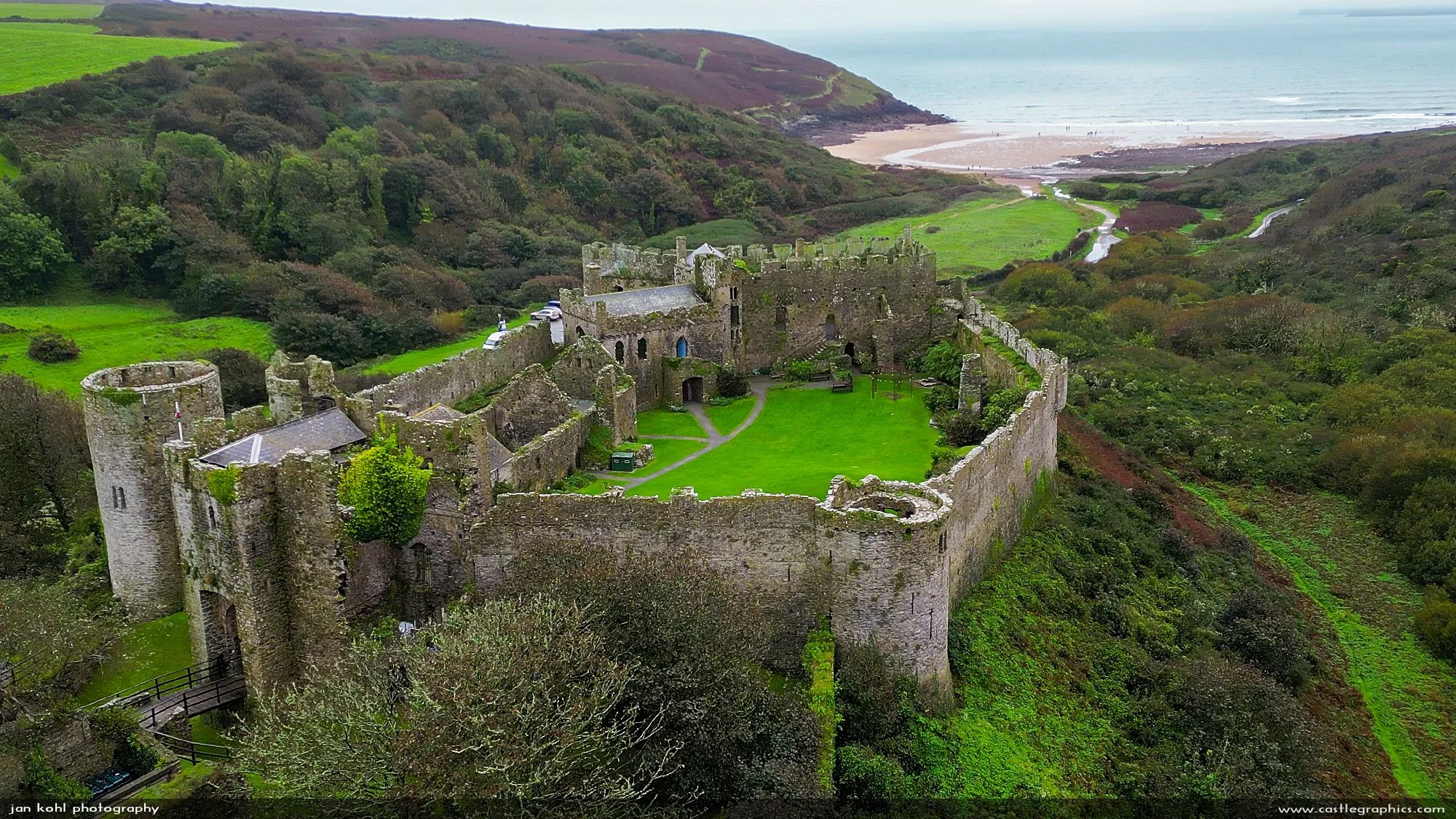
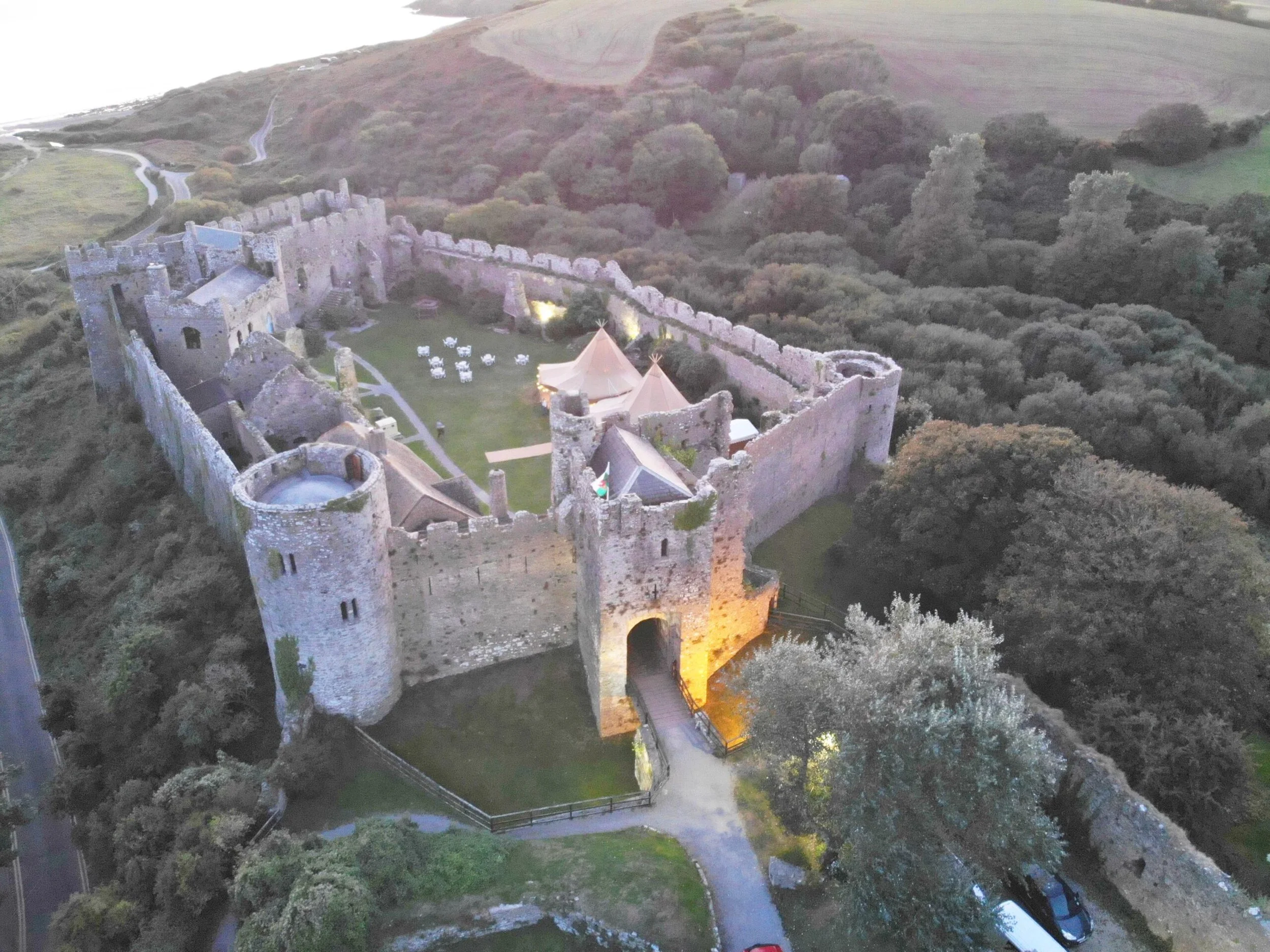
Manorbier Castle follows a compact rectangular plan. Stone curtain walls enclose the site. The layout reflects Norman design.
Gatehouse
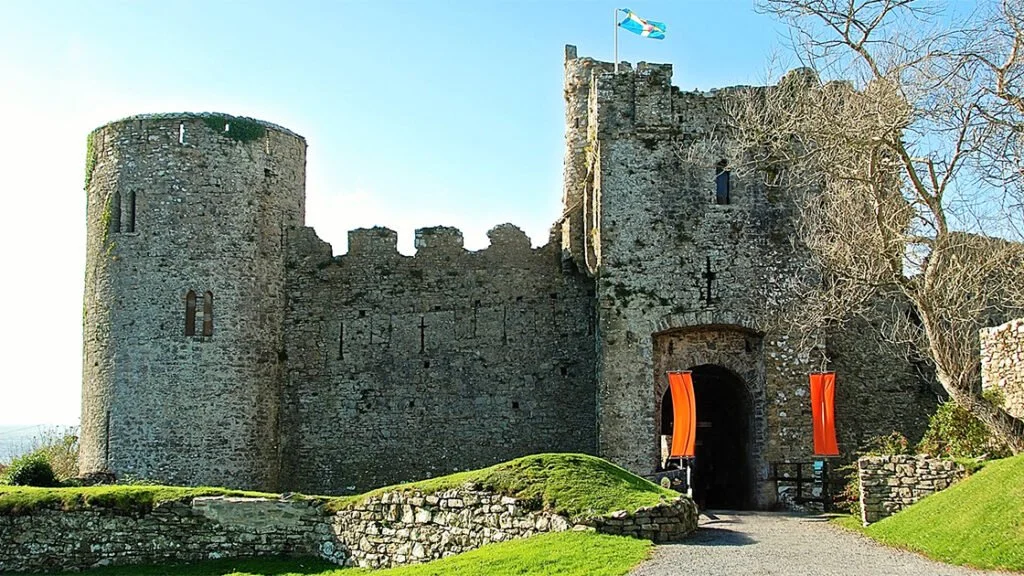
The gatehouse forms the main entrance. It includes defensive features such as a portcullis and thick doors. Upper rooms gave space for guards.
Curtain Walls and Towers
High stone walls surround the castle. Square towers project at key points. These allowed archers to defend the site.
Great Hall
The great hall served as the main living and dining space. Large windows brought in light. The remains show the scale of daily life for the lord’s household.
Chapel
A small chapel stands within the walls. It includes simple stonework and narrow windows. This space met the religious needs of the residents.
Private Rooms
Residential chambers line the inner walls. These rooms provided sleeping and storage space. Fireplaces show efforts to improve comfort.
Did You Know?
Visitors often notice worn stone steps inside the towers. These steps show heavy use over centuries.
Images
Legends and Stories
Manorbier Castle has a small number of recorded local stories. Most accounts come from visitor reports and local guides rather than medieval texts.
Gerald of Wales’ Description
Gerald of Wales wrote about the castle in the 12th century. He described it as a pleasant place with orchards and fish ponds. This account comes from his travel writing. It reflects real features rather than legend.
Hidden Passage Claims
Some visitors report talk of hidden passages within the walls. Local guides sometimes mention routes that link the castle to the coast. There is no confirmed archaeological proof. These stories appear in visitor discussions on sites such as TripAdvisor.
Ghost Sightings
A small number of visitors claim unusual sounds inside the towers. Reports include footsteps and doors moving. These claims appear in online reviews and local folklore pages. There is no historical record to support them.
Each story reflects modern interest in the site. Most come from visitor experience rather than documented history.
FAQs
What type of castle is Manorbier Castle?
Manorbier Castle is a Norman stone castle. It replaced an earlier timber fort.
When was Manorbier Castle built?
Construction began in the late 11th century. Stone rebuilding took place in the 12th century.
Can you go inside the castle?
Yes. Visitors can access most areas. This includes towers, walls, and rooms.
Is Manorbier Castle suitable for children?
Yes. Families can visit the site. Children should stay supervised due to uneven ground.
Are there facilities on site?
Yes. There is a café, shop, and toilets available for visitors.
Do you need to book in advance?
Booking is not always required. You should check the official website before travel.
Conclusion
Manorbier Castle is a well-preserved Norman site. It shows both defence and domestic design. The layout is clear and easy to follow.
The castle links to Gerald of Wales. His writing gives a direct account of life here. This adds strong historical value.
Visitors can access walls, towers, and interior spaces. Coastal views add to the experience. The site suits short visits and local trips.
Sources
https://www.manorbiercastle.co.uk/
Official site. Provided opening times, ticket prices, facilities, and visitor access details.https://coflein.gov.uk/en/site/94189/
RCAHMW archive. Supplied verified historical and architectural information about the castle.