Aberlleiniog Castle: Visiting Guide, Tips & Tickets (2026)
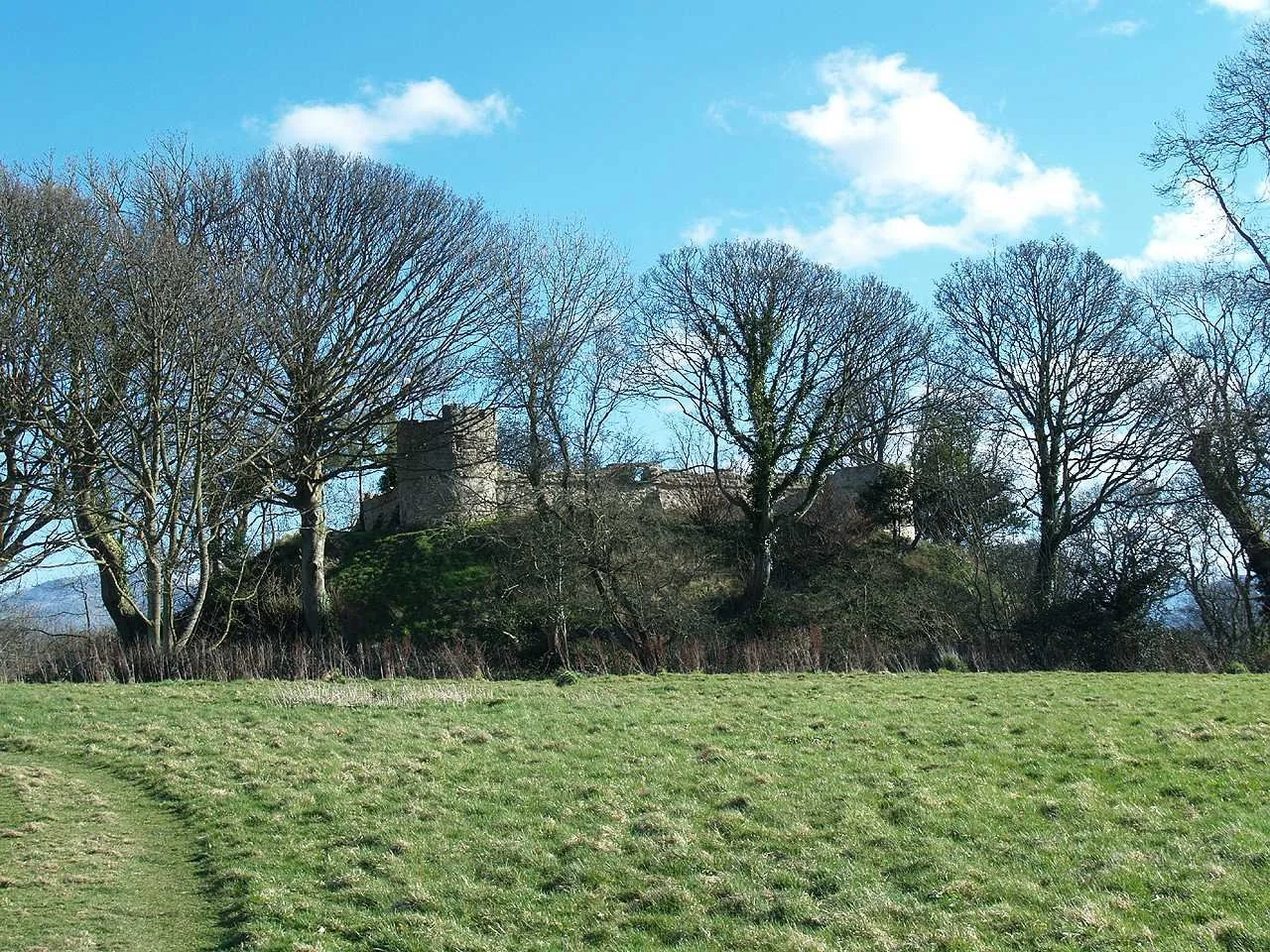
Aberlleiniog Castle is a medieval fortification on the Isle of Anglesey in North Wales. It stands near the Menai Strait. The site dates to the early 12th century. It formed part of Norman control after the conquest of Wales.
The castle began as a timber structure. Builders later added stone defences. Today, it remains a ruin. Key earthworks and stone walls still survive. The site is managed by a local trust.
Visitors can walk the grounds. You can view the remains at close range. The setting includes woodland and coastal views.
Visiting
Aberlleiniog Castle is an open ruin. You can visit at any time. There is no staffed entrance.
Opening Times
Open daily. No fixed hours. Visit during daylight for safety.
Ticket Prices
Free entry. No ticket required.
Directions
The site is near Llangoed on Anglesey. Access is via a minor road. A public footpath leads to the castle.
Facilities
No on-site facilities. No toilets or café. Bring what you need.
Parking
Limited roadside parking is available nearby. Do not block access routes.
Dog Policy
Dogs are allowed. Keep them under control. The area includes uneven ground.
Official Information
No official Cadw page exists. The site is not managed by Cadw. Local groups oversee basic upkeep.
Nearby Castles (Part of a Castle Crawl!)
Beaumaris Castle
Beaumaris Castle is an unfinished masterpiece of medieval military design, located on the Isle of Anglesey in North Wales.
Visitor Tips
Wear strong shoes. Ground is uneven and can be muddy.
Take care on the motte. Slopes are steep.
Bring water and snacks. No facilities are on site.
Visit in daylight. There is no lighting.
Check weather before you go. Paths can become slippery.
Keep dogs under control. Livestock may be nearby.
Respect the ruins. Do not climb unstable walls.
A Brief History
Aberlleiniog Castle dates to the Norman invasion of North Wales in the early 12th century. The Normans built it to control the Menai Strait. This water route linked Anglesey to the mainland.
The first structure used timber. It stood on a motte, which is a raised earth mound. A bailey, which is an enclosed yard, lay beside it. This design allowed fast construction and strong defence.
Likely involved in regional conflict. Control of the site changed during these conflicts. The Normans rebuilt parts of the castle in stone during the 12th century. This work strengthened its defences.
By the later medieval period, the castle lost its military value. Larger stone castles took over its role. The site fell into decline. Stone was removed for reuse in nearby buildings.
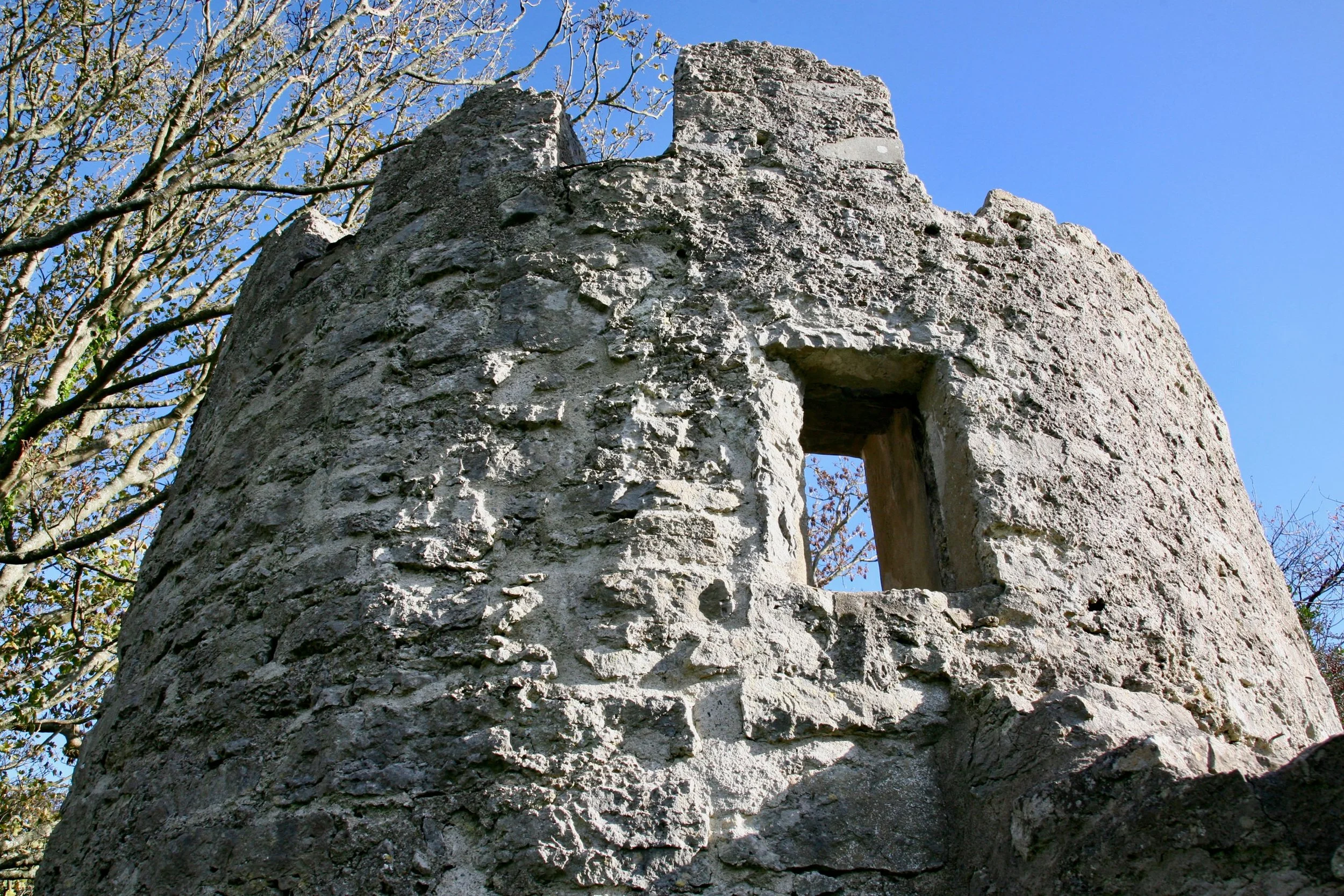
Today, the earthworks remain clear. Parts of the stone curtain wall still stand. These features show the original layout.
Features and Layout
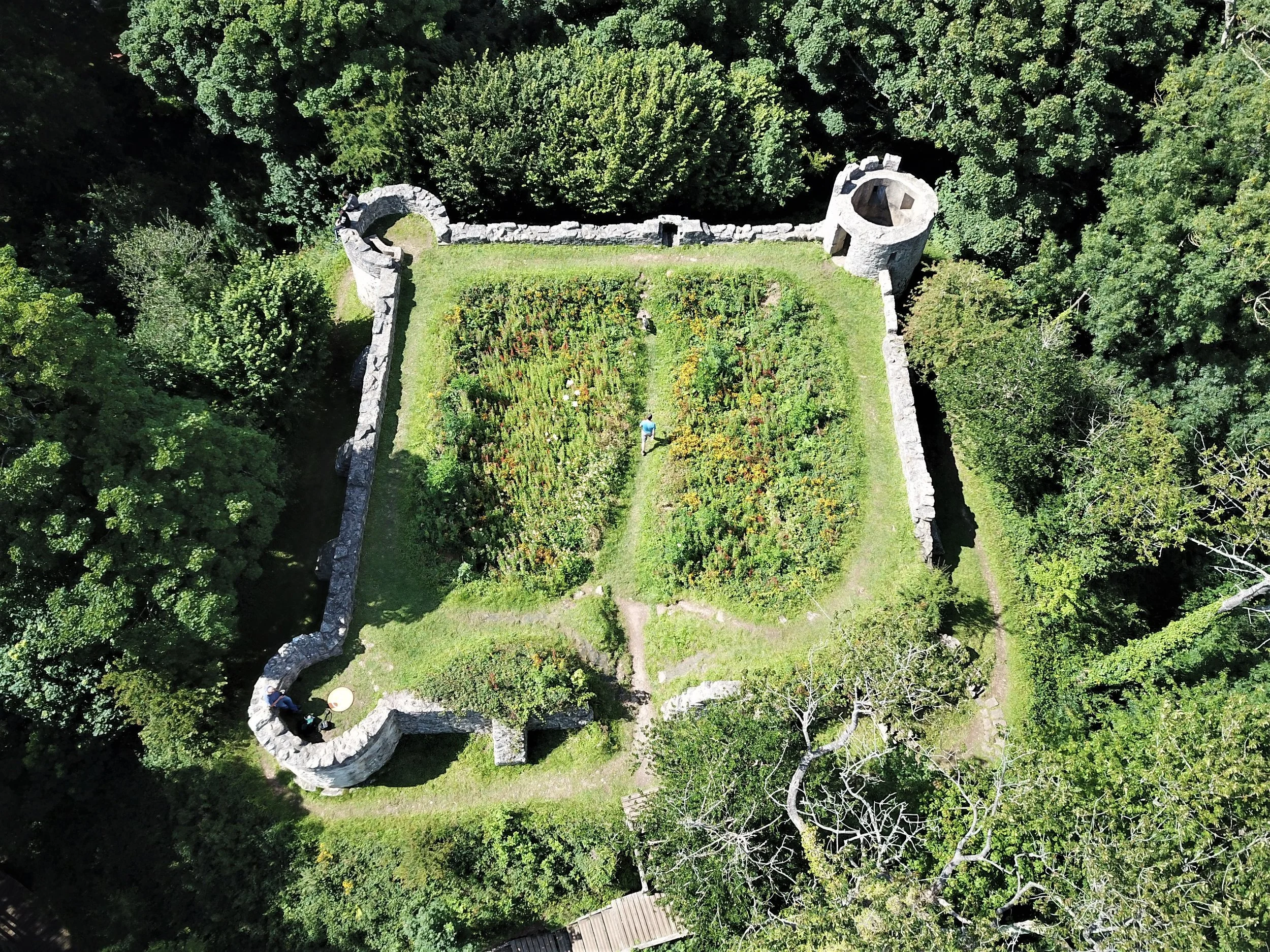
Aberlleiniog Castle shows a clear motte-and-bailey design. This layout uses a raised mound and an enclosed yard for defence.
The motte is a high earth mound. It forms the main defensive point. A timber tower first stood on top. Later builders added stone. The mound still rises above the site. You can see wide views from the top.
The bailey lies beside the motte. It is a flat enclosed area. A ditch and bank surround it. This space held buildings such as halls and storage huts. No full structures remain today.
Parts of a stone curtain wall survive. A curtain wall is a protective outer wall. These sections date from later upgrades. The remains show how the Normans improved defence over time.
A deep ditch runs around parts of the site. This ditch made attacks harder. It also marked the boundary of the castle.
The castle stands within light woodland. Trees now cover parts of the earthworks. Paths allow access across the site.
Did You Know?
Visitors have noted worn paths along the motte. These marks come from repeated foot traffic over many years.
Legends and Stories
Aberlleiniog Castle has few recorded legends. Most accounts focus on its military use. Some local stories still exist.
Some visitors report a quiet and uneasy feeling near the motte. A few online reviews mention a sense of being watched. These reports appear in visitor comments on platforms such as TripAdvisor. No historical record confirms this claim.
Local guides sometimes mention hidden movement in the woodland. These stories link to past conflict at the site. They suggest that the land holds memory of earlier battles. This idea comes from informal guide commentary rather than written sources.
Unlike larger Welsh castles, this site has no strong myth cycle. No links exist to figures such as King Arthur. This reflects its role as a small military post.
FAQs
Is Aberlleiniog Castle free to visit?
Yes. Aberlleiniog Castle has no entry fee. You can access the site at no cost.
Can you park at Aberlleiniog Castle?
There is limited roadside parking near the access path. Take care not to block entrances or narrow roads.
How long does a visit take?
Most visits last between 30 minutes and one hour. This depends on how much you explore the earthworks.
Is the site suitable for children?
Yes, but supervision is needed. The ground is uneven. The motte has steep sides.
Are there facilities at the castle?
No. There are no toilets, shops, or cafés on site. Plan ahead before you arrive.
Is Aberlleiniog Castle managed by Cadw?
No. The site is not under Cadw. Local groups manage basic upkeep.
Conclusion
Aberlleiniog Castle is a simple Norman site. It shows early castle design in Wales. The motte-and-bailey layout remains clear. Earthworks still define the structure.
The site has no modern facilities. Access is open and informal. This allows close inspection of the remains. The setting is quiet and rural.
It suits short visits. It also suits those who study early Norman control in North Wales.
Sources
https://coflein.gov.uk/en/site/95340/aberlleiniog-castle
Provided detailed historical records and site description.https://www.castlesfortsbattles.co.uk/wales/aberlleiniog_castle.html
Gave background on construction phases and layout.https://www.angleseyhistory.co.uk/places/aberlleiniog-castle/
Offered local context and site significance.